The Vikings
Early Britainto 1066
The Vikings' first contact with Britain came in AD 789, when raiders landed to seize goods and carry off slaves rather than to settle — that came only later. Over time, though, they stopped raiding and started staying, forming their own communities across the east and north of England, an area that became known as the Danelaw; place names there still show the Viking imprint today, among them Grimsby and Scunthorpe.
Resistance to the Vikings came from two directions. In England, the rival Anglo-Saxon kingdoms banded together behind King Alfred the Great, and his forces defeated the Vikings in the field, though many who had already settled stayed on, mixing into local communities rather than leaving. In the north, the same threat pushed the peoples there to unite under one ruler, Kenneth MacAlpin, and it was this union that first took the name Scotland.
What to remember
| The first Viking raids on Britain | AD 789 The first Viking contact was a raid for goods and slaves; settling came later. |
|---|
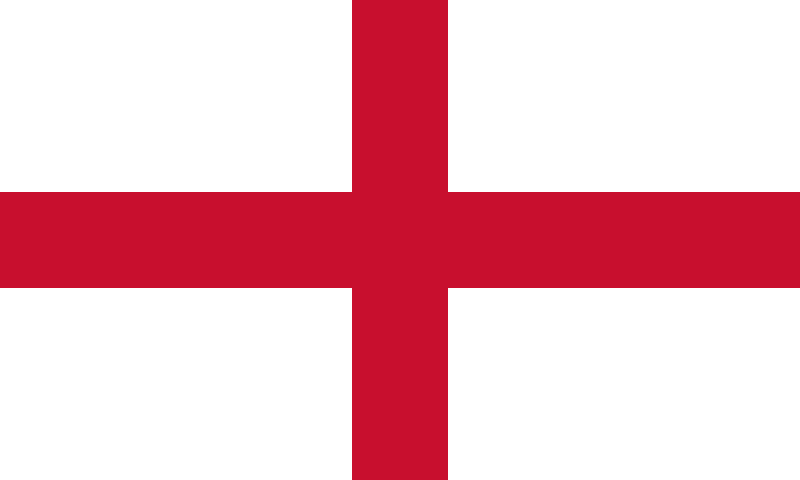 The Danelaw The Danelaw | the east and north of England Where the Viking invaders settled and stayed; Grimsby and Scunthorpe are Viking names. |
|---|
| The Anglo-Saxon kingdoms uniting against the Vikings | King Alfred the Great He defeated the Vikings, but many of them stayed and mixed with local communities. |
|---|---|
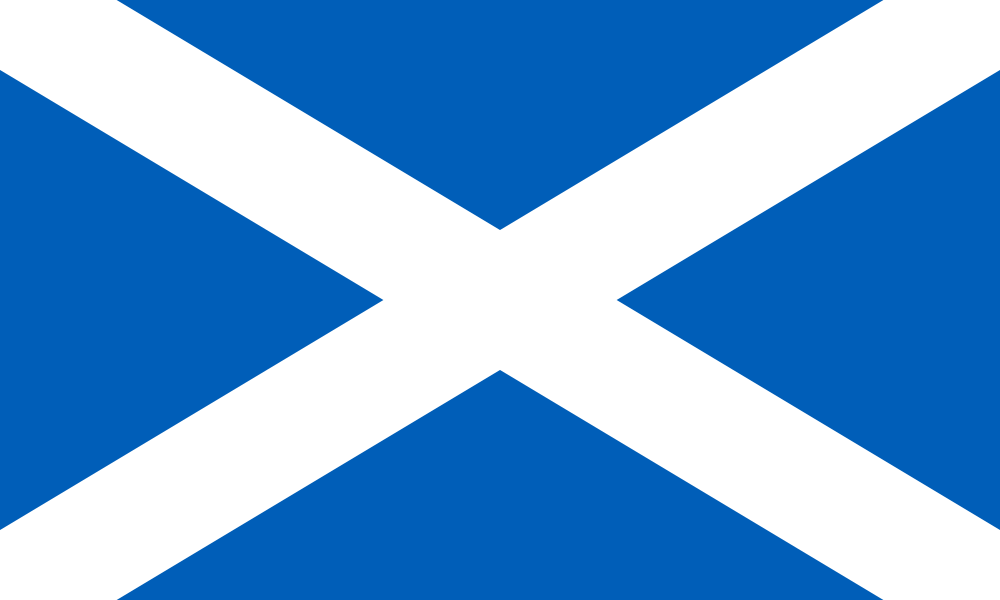 The peoples of the north uniting against the Vikings The peoples of the north uniting against the Vikings | Kenneth MacAlpin The union the name Scotland was first used to describe. |
| The Vikings | Denmark and Norway First raiders, then settlers in the east and north of England, the Danelaw. |
|---|
Everything in Early Britainor the whole course, from the beginning