The Union Flag and the union with Ireland
A global power1714 to 1901
The wars against France and the settlement with the American colonies both left lasting marks well beyond the fighting itself. Britain formally recognised the colonies' independence in 1783, closing out a conflict it had already lost on the ground, though it took time to agree final terms.
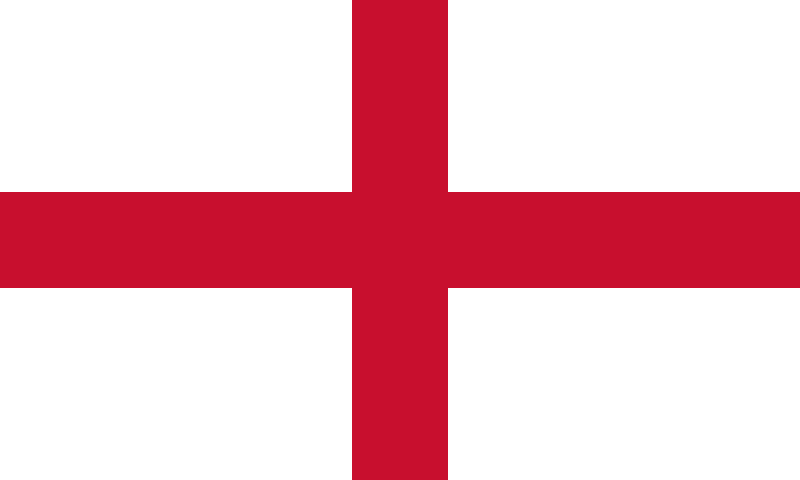
Ireland, too, was drawn more tightly into the United Kingdom: under the Act of Union of 1800, Ireland joined England, Scotland and Wales to form a single United Kingdom. That union changed the flag flown across the whole country. A version of the Union Flag already existed, combining England's cross of St George with Scotland's cross of St Andrew, created as far back as 1606; Ireland's cross of St Patrick was only added once Ireland itself joined the union.
The war against Napoleon's France also left monuments still standing today. Nelson's Column stands in Trafalgar Square, London, honouring the admiral who led the fleet to victory at sea, and his flagship, HMS Victory, survives and can be visited in Portsmouth.
What to remember
| Act of Union with Ireland | 1800 It joined Ireland to England, Scotland and Wales as the United Kingdom. |
|---|
| Britain recognising the colonies' independence | 1783 Formally ended the American War of Independence, seven years after the 1776 declaration. |
|---|---|
| The first Union Flag being created | 1606 England's cross of St George with Scotland's cross of St Andrew. Ireland's cross of St Patrick came later. |
 Nelson's Column Nelson's Column | Trafalgar Square, London Commemorates Admiral Nelson, who died at the Battle of Trafalgar in 1805. |
|---|---|
| HMS Victory | Portsmouth Nelson's flagship at Trafalgar, preserved today as a visitor attraction. |
Everything in A global poweror the whole course, from the beginning